Building an Infused Spice Shelf: Which Jars to Buy First
Most people buy one infused jar, use it twice, and lose it behind the paprika. Here is how to build a small shelf you actually cook from — which three formats to start with, what order to buy them in, and how to store and label them so the dose stays honest.
There is a predictable arc to buying your first infused seasoning. You pick the most interesting-sounding jar on the shelf — usually something with three adjectives in the name — you use it twice, you are never quite sure how much went on, and six months later it is behind the paprika with a crust around the lid.
The problem is not the jar. It is the order. An infused shelf works the way a spice drawer works: a couple of things you reach for constantly, and a few you reach for on purpose. This guide is about getting the constant ones right first.
The three formats, and why the format matters more than the flavour
Every infused seasoning is one of three things, and the format decides where it can go:
- Salt disperses into fat. It goes into butter, oil, dressings, and anything you finish with your hands. This is the most flexible format in a home kitchen.
- Sugar dissolves into liquid. Drinks, syrups, glazes, whipped cream, no-bake sweets. It covers the entire cold half of your cooking.
- A spice blend clings to a surface. Roasted vegetables, popcorn, chickpeas, a piece of fish that just came out of the pan.
Notice that those three barely overlap. That is the whole argument for buying one of each before buying a second of any. Two salts is a preference; a salt and a sugar is a kitchen.
Buy in this order
Jar one: a plain infused salt. Not garlic-herb, not chilli-lime — plain. A neutral salt is the only jar that teaches you what a given amount actually feels like, because nothing else in the flavour is competing for your attention. You will use it on eggs, on roasted vegetables, in a compound butter, and in exactly the quantities you would use ordinary finishing salt.
Jar two: a plain infused sugar. The same argument, in the other half of the kitchen. Sugar is where beginners get their most reliable results, because dissolving is more forgiving than heating — stir it into hot-but-not-boiling water and you have a syrup you can dose by the teaspoon rather than by the sprinkle.
Jar three: one loud thing. Now buy the interesting jar. A smoked salt, a Cajun blend, a lavender sugar — whichever one you would genuinely reach for on a Tuesday. The reason it comes third is that by now you know your own dose, so the fun jar arrives as flavour rather than as a variable.
Three jars is a shelf. Six is a collection, and collections go stale.
Storage, or why your jar tastes like nothing after a month
Infused seasonings are more fragile than their plain cousins in one specific way: heat and light degrade the infusion faster than they degrade the salt or sugar carrying it. Two habits cover almost all of it.
Keep them out of the cabinet above the stove. That cabinet runs warm every time you cook, which is precisely the low, slow heat that quietly wears an infusion down over weeks. A drawer or a shelf away from the hob is better, and a cool cupboard is better still.
Keep them dry and closed. Steam is the other enemy — never season directly over a simmering pot, because the plume goes straight into the jar and clumps it. Pour into your hand, then season.
Label the jar with the number you care about
The single most useful thing you can do to a new jar takes ten seconds: write the per-teaspoon amount on the lid in marker, straight off the label.
Recipes give you quantities in teaspoons. Product labels give you totals for the whole container. Doing that conversion on the lid once, in daylight, is far more reliable than doing it in your head at dinner time with a hot pan in front of you. It also makes the arithmetic in a recipe trivial: if a tray of vegetables takes two teaspoons and serves four, you already know what one portion carries.
Three mistakes worth skipping
Cooking with the infused jar instead of finishing with it. Season the pan with ordinary salt and finish the plate with the infused one. You keep control of the seasoning and the dose, and the infusion never sits in a hot pan.
Buying a blend you cannot describe a meal for. If you cannot name the dish you would use it on this week, the jar is a souvenir.
Treating the shelf as a spice rack. These jars are seasonings and they are for adults 21+. Store them where the rest of the house does not casually reach, and be as deliberate about who is in the kitchen as you are about how much goes on the food.
Where to start tonight
Take whatever infused jar you already own, put it on the counter, and use it to finish one thing you were cooking anyway — a fried egg, a bowl of rice, a slice of buttered bread. That is the entire technique. Everything else on this site is a variation of finishing something ordinary with a light hand, and the shelf exists to make that easy rather than special.
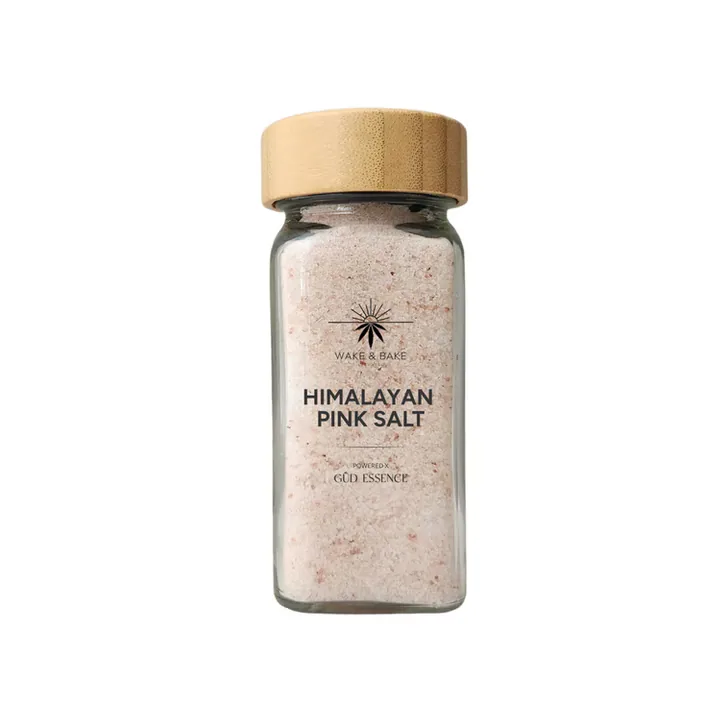
The plain salt. Buy this one first — it teaches you the dose. 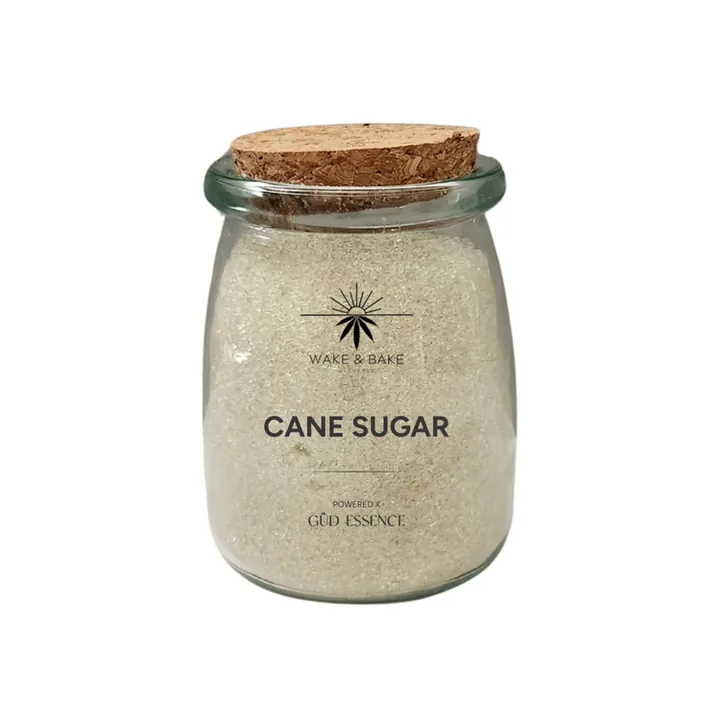
The plain sugar. Same job, opposite half of the kitchen. 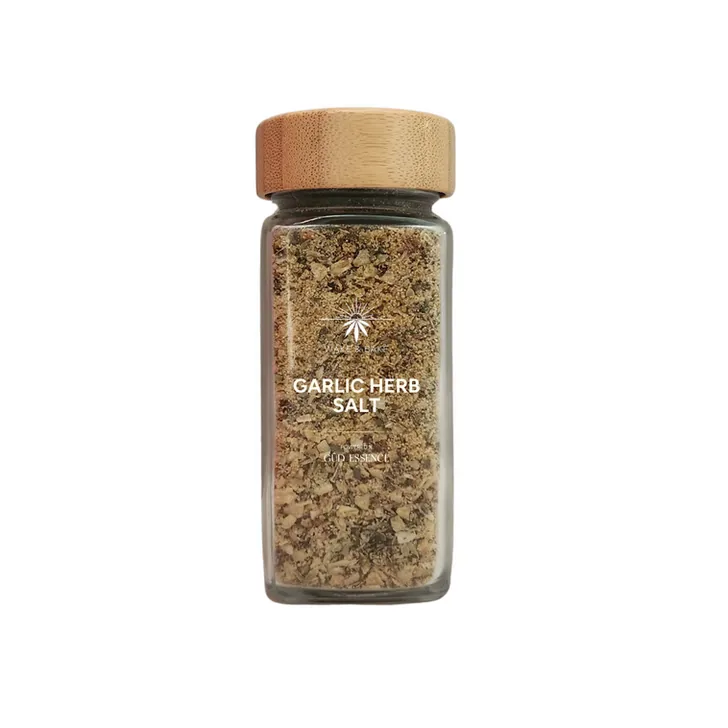
A blended salt for the nights you do not want to think. 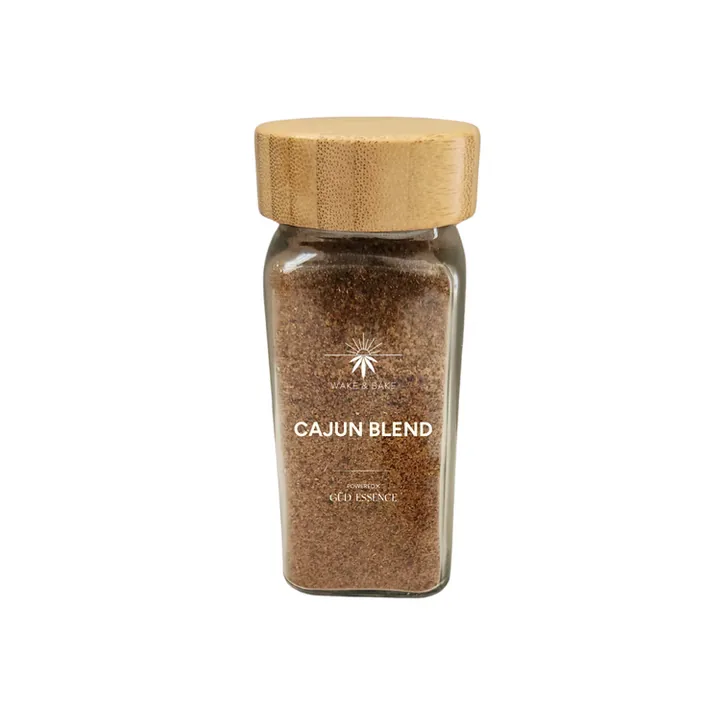
One loud blend, for sheet pans and popcorn. 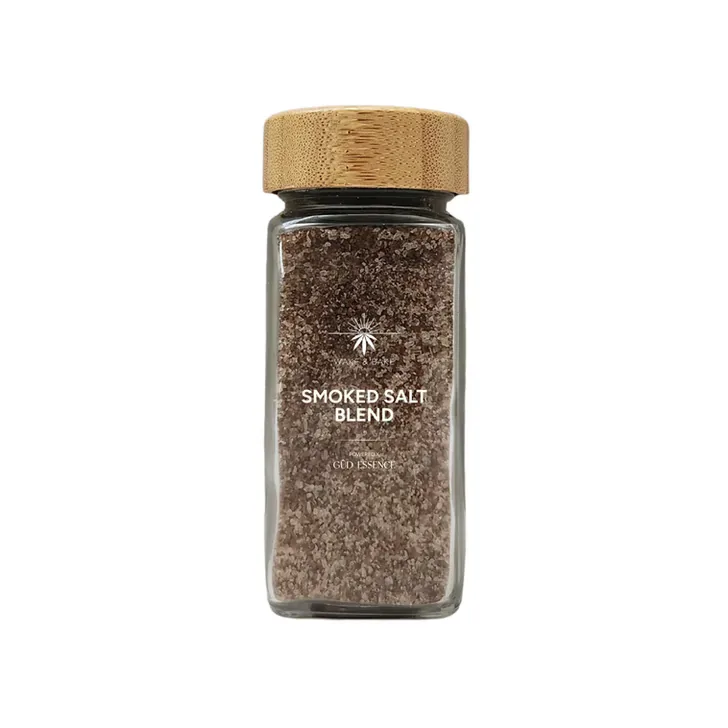
Smoked salt is the wildcard. Finish with it; never cook in it.